Reaction Systems with Known Non-Absorbing Species
- Files
If you are aware of which species are non-absorbing in your case in advance, you can exclude them from the identification process, fixing the associated column in the S-matrix to zero, and also excluding its variance. You declare your components as in the examples above and then additionally declare the non-absorbing species by the following lines. If species ‘C’ is non-absorbing, then simply set its absorbing argument to False when declaring the component.
r1.component('C', value=0.0, absorbing=False)
In the plot of the absorbance profile the non-absorbing species then remains zero as you can see in the following results.
import kipet

r1 = kipet.ReactionModel('reaction-1')

# Add the model parameters
r1.parameter('k1', value=2, bounds=(0.1, 5.0))
r1.parameter('k2', value=0.2, bounds=(0.01, 2.0))

# Declare the components and give the initial values
A = r1.component('A', value=1)
B = r1.component('B', value=0.0, known=True, bounds=(1e-8, 1e-4))
C = r1.component('C', value=0.0, absorbing=False)

# Add the data
r1.add_data(category='spectral', file='example_data/Dij.txt')

# define explicit system of ODEs
rA = r1.add_reaction('rA', k1*A, description='Reaction A' )
rB = r1.add_reaction('rB', k2*B, description='Reaction B' )

# Use the stoichiometry to build the reaction network:
stoich_data = {'rA': [-1, 1, 0],
               'rB': [0, -1, 1]}

r1.reactions_from_stoich(stoich_data)

# Settings
r1.settings.collocation.ncp = 1
r1.settings.collocation.nfe = 60

r1.run_opt()
r1.results.show_parameters
r1.plot()
Confidence intervals:
k2 (0.9999997318555397,1.0000000029408624)
k1 (0.09999999598268668,0.10000000502792096)

The estimated parameters are:
k2 0.999999867398201
k1 0.10000000050530382
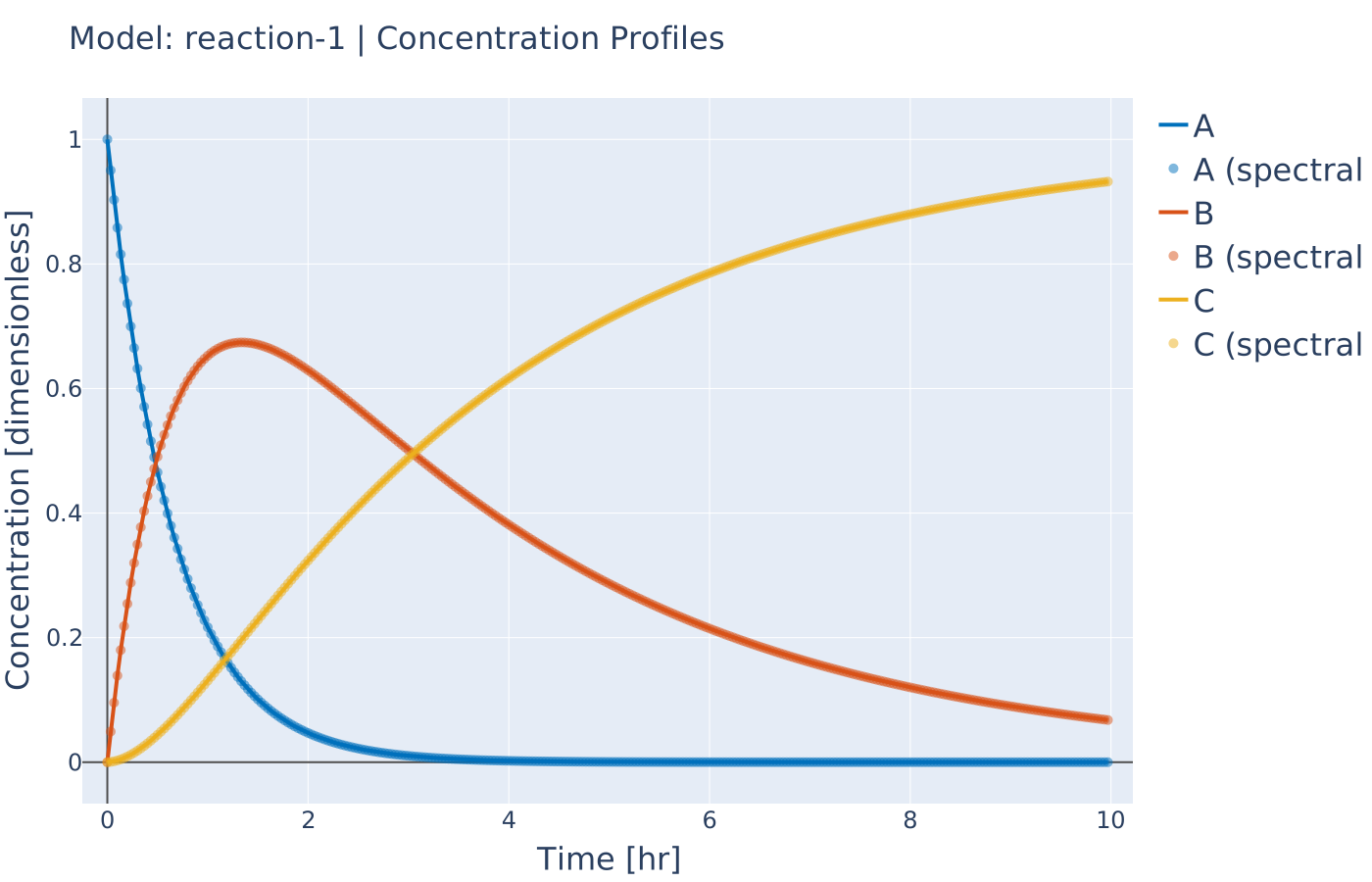
Fig. 16 Concentration profile of solution to Tutorial 6
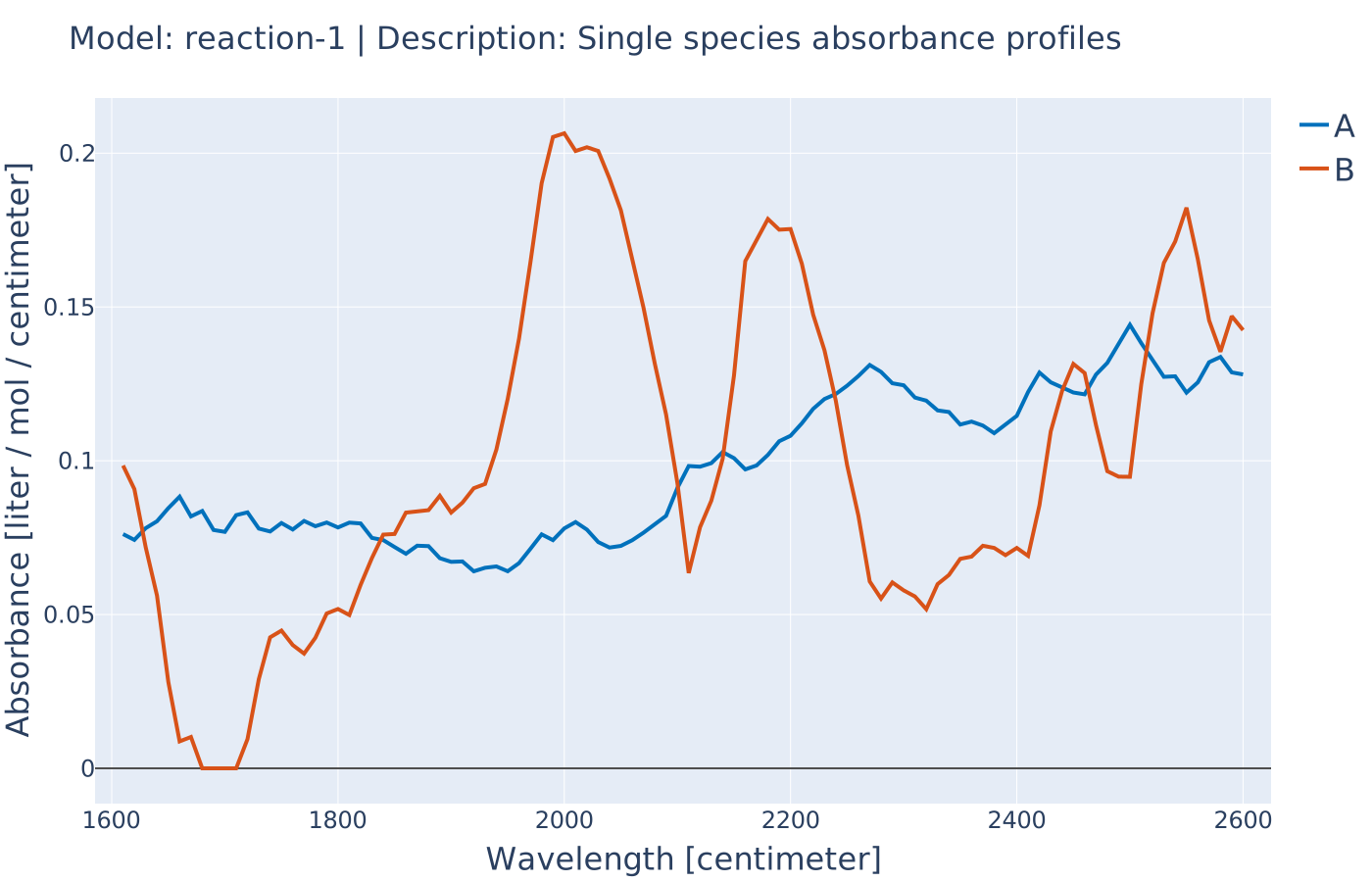
Fig. 17 Absorbance profiles in Tutorial 6