Mixed Units in a Batch Reactor
- Files
In this example, we again look at the simple series reaction we have considered in many of the examples. The difference here is that we are modeling a batch reactor with a component feed that lasts only a portion of the reaction.
This example also shows how KIPET can automatically check the units provided and ensure that the resulting model uses consistent units.
Note
Since the ODEs are explicitly entered, the volume changes are not automatically added. In this example you can see that we did this manually, although this is not necessary.
import kipet

    r1 = kipet.ReactionModel('fed_batch')

    # Set the base time unit (match data)
r1.unit_base.time = 'min'
r1.unit_base.volume = 'L'

# Reaction rate constant (parameter to fit)
k1 = r1.parameter('k1', value = 0.05, units='ft**3/mol/min')

# Components
A = r1.component('A', value=2.0, units='mol/L')
B = r1.component('B', value=0.0, units='mol/L')
C = r1.component('C', value=0.0, units='mol/L')

# Reactor volume
V = r1.volume(value = 0.264172, units='gal')

# Step function for B feed - steps can be added
s_Qin_B = r1.step('s_Qin_B', coeff=1, time=15, switch='off')

# Volumetric flow rate of the feed
Qin_B = r1.constant('Qin_B', value=6, units='L/hour')

# Concentration of B in feed
Cin_B = r1.constant('Cin_B', value=2.0, units='mol/L')

# Add the data
filename = 'data/abc_fedbatch.csv'
r1.add_data('C_data', file=filename, remove_negatives=True, time_scale='min')

# Convert your model components to a common base
# KIPET assumes that the provided data has the same units and will be
# converted as well - be careful!
#r1.check_component_units()

Qin = Qin_B * s_Qin_B

R1 = k1*A*B
QV = Qin/V

r1.add_ode('A', -A*QV - R1 )
r1.add_ode('B', (Cin_B - B)*QV - R1 )
r1.add_ode('C', -C*QV + R1)
r1.add_ode('V', Qin )

# Check for consistant units in the model equations
r1.check_model_units(display=True)

r1.run_opt()
r1.plot()
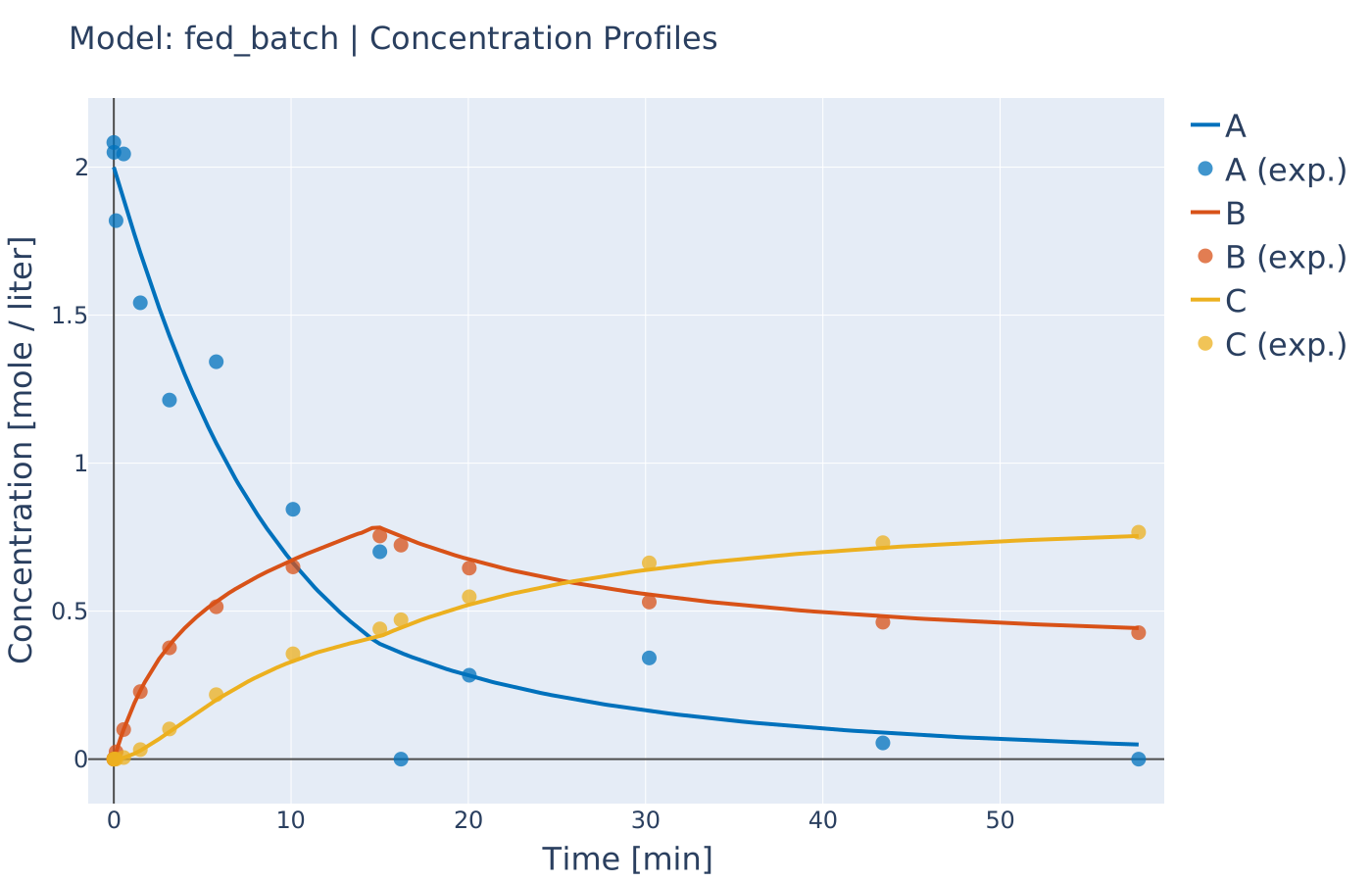
Fig. 30 Concentration profile results
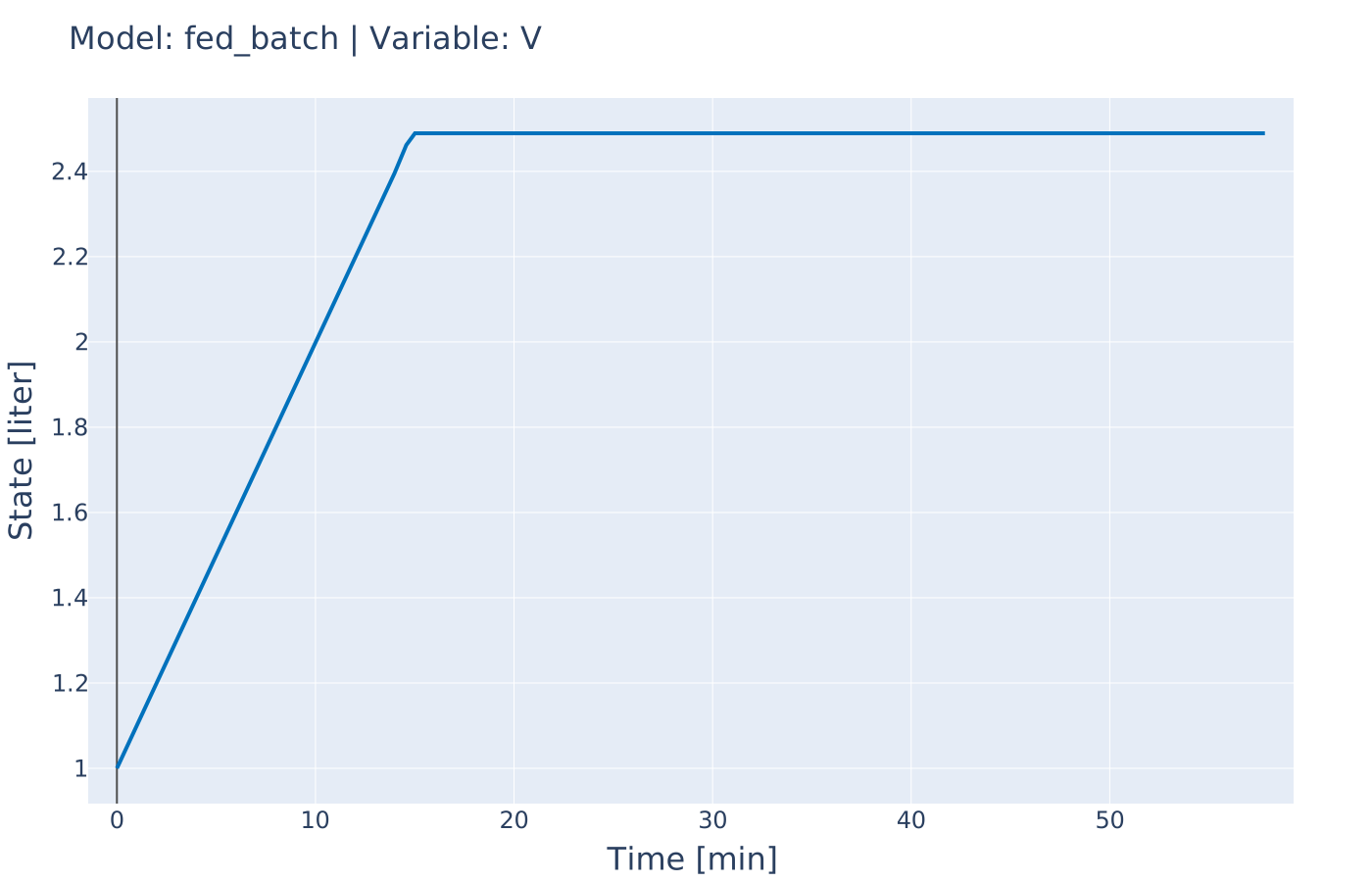
Fig. 31 Volume change during the reaction